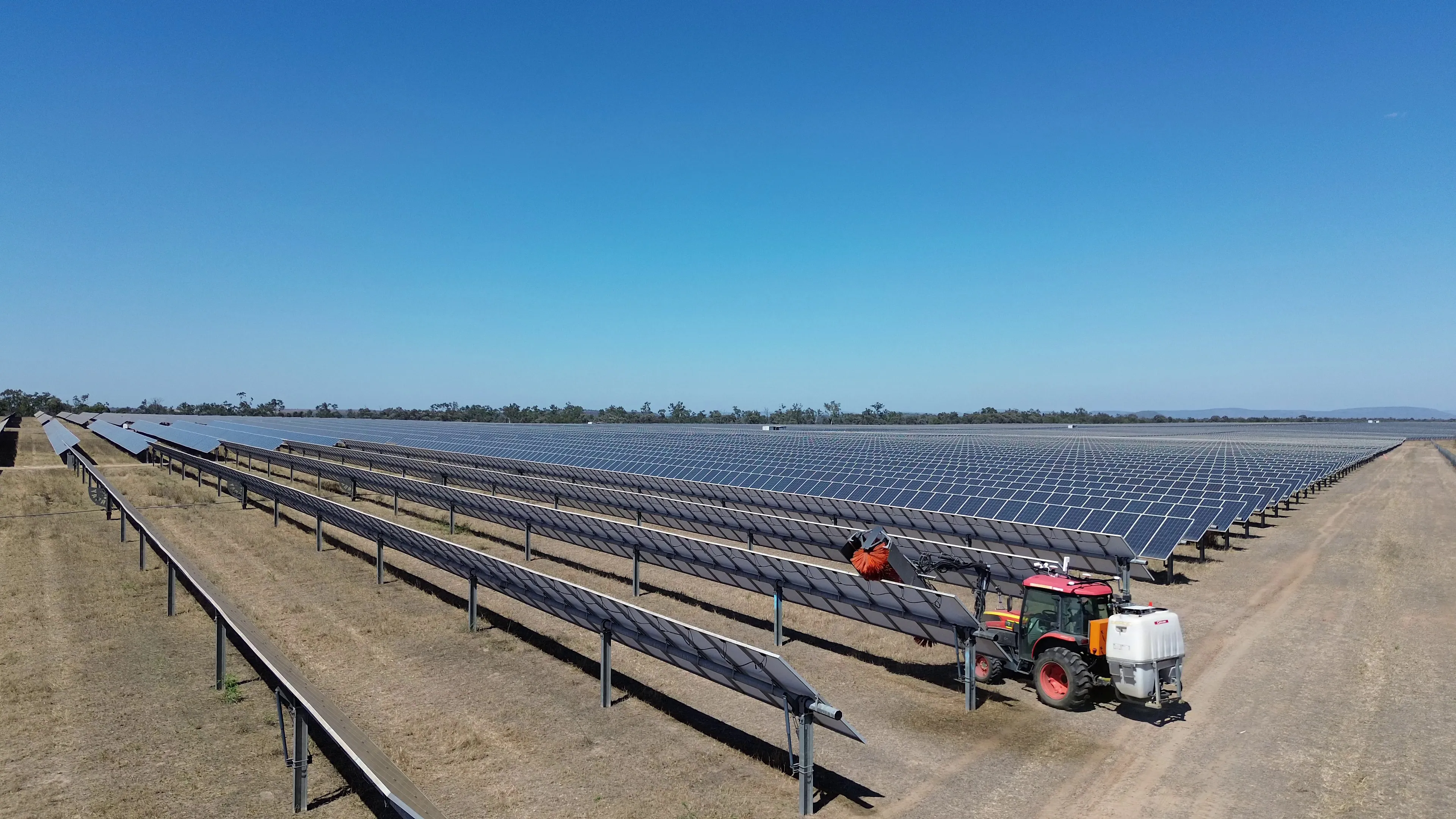
Autonomous cleaning for utility-scale solar.
Soiling costs solar farms 2–7% of their energy yield typically, with extreme cases exceeding 30%. ARC1 is an autonomous platform built to recover it, cleaning continuously, day and night, at fleet scale.
Soiling is a permanent, compounding cost.
Every solar farm soils over time. Dust, pollen and grime accumulate on the glass and steadily cut output. Because the loss is gradual and invisible, it is easy to overlook. Across a utility-scale site it becomes a significant, ongoing revenue leak. Manual cleaning is expensive and labour-intensive, so it rarely happens as often as the economics would justify.
Energy yield lost to dust and grime on panels. Our own fleet model across 132 NEM farms averages 3.4%.
Not just a Middle East or North Africa problem. Losses above 30% have been recorded at Australian sites including mine-site solar farms, even with the benefits of natural rainfall.
People a conventional manual clean of a large site can require. Slow, costly, and infrequent.
Heavy soiling also drives thermal hotspots that can damage cells and shorten panel life. Figures from peer-reviewed studies, public site data and our own fleet modelling.
The autonomy stack, proven on ARC1.
ARC1 is the machine on which we proved our autonomy stack: self-driving cleaning, sustained day and night, supervised remotely. The stack is the asset, and it is validated in the field, not on paper. The principle is simple: let the machine do the repetitive work continuously, and let one person oversee many of them.
Its articulated cleaning head follows the tilt of each row, so panels are cleaned thoroughly without manual handling: the same job a crew does by hand, done consistently and on schedule.
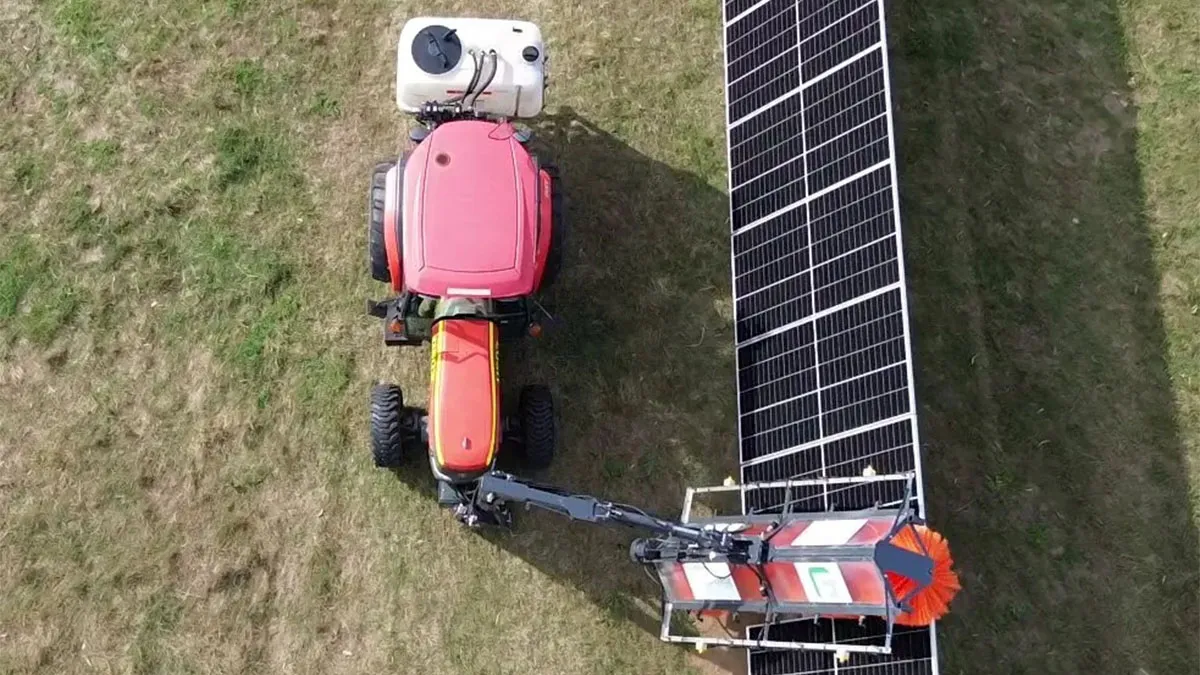
Autonomous by design
A self-driving platform with an articulated cleaning head works the rows without an operator walking the field, taking the manual labour out of routine maintenance.
Around-the-clock operation
Built to run day and night, including overnight when panels are idle. Cleaning off-peak means no cost to production and many more cleans per year.
Fleet + remote supervision
Designed so one person can supervise a fleet across a large site remotely. This is what makes frequent cleaning economically viable.
The ARC1 autonomy stack is field-proven (TRL 7). Spark is now productising it as retrofit kits for the existing cleaning fleet, and scaling toward commercial deployment.
Validated on a working solar farm.
This is not a lab demo. The autonomy stack has run on an operating utility-scale farm, cleaning at scale without damaging a single panel.
Changing the economics of clean panels.
The goal is not a marginally better cleaning crew. It is removing the crew from the equation, so that keeping panels clean stops being a costly exception and becomes the routine default.
- – Large crews clean the field by hand
- – Slow, costly, done infrequently
- – Panels sit soiled between cleans
- – Manual work in heat, around live equipment
- + Machines clean continuously, day and night
- + One operator supervises a fleet remotely
- + Frequent cleaning becomes economically viable
- + People stay out of repetitive, risky field work
A fast-growing market with a permanent maintenance need.
Solar is being built out at record scale, and every panel added is another surface that will need cleaning for decades. Rapid growth alongside a recurring, unavoidable maintenance need is the market autonomous cleaning is built to serve.
Global utility-scale solar sits near 1 TW today and is projected to reach roughly 3.5–4 TW by 2030, among the fastest-scaling energy technologies on record.
The addressable solar-cleaning market across Australia and the US is projected to grow past $600M.
Cleaning is not a one-off. It returns continuously, an ongoing operational cost at every site, for decades.
Figures from industry research and internal analysis; a fuller breakdown is available on request.
Built by an engineer who knows the machine.
Spark Autonomy is led by Geoff Sokoll, a mechanical engineer with 30+ years of industry experience, including six years commercialising new technology in an energy sector startup. He has carried hard engineering from prototype to real-world use before, and is doing it again with ARC1, having acquired the intellectual property behind it and continuing its development directly.
This is an early-stage venture, deliberately run lean and hands-on. The priority now is proving the technology and building the right partnerships. If you are an investor, a solar operator, or a potential collaborator, the door is open.
Let's talk.
Whether you're an investor, a solar operator with a soiling problem, or a potential partner, I'd like to hear from you.
Thanks. Your message is on its way to my inbox, and I'll get back to you personally.